Hardwood vs. Engineered Hardwood vs. Laminate
Which Flooring Is Right for Your GTA Home?
Standing in a flooring showroom, hardwood, engineered hardwood, and laminate can look almost identical. Walk closer and the differences start to matter — a lot. The right choice affects your budget, how the floor holds up to Ontario’s brutal humidity swings, and even what you’ll get back at resale. Here’s a straight, no-fluff comparison to help you choose with confidence.

The Fundamental Difference
Solid hardwood is exactly what it sounds like — a plank milled entirely from a single piece of wood, top to bottom.
Engineered hardwood has a genuine hardwood veneer (usually 2–6mm) bonded over several layers of plywood or high-density fiberboard. It’s real wood on the surface, with a more stable core underneath.
Laminate is a synthetic product: a high-density fiberboard core topped with a high-resolution photographic image of wood grain, sealed under a tough wear layer. It looks like wood but isn’t.
That construction difference is what drives everything else — cost, durability, and how each product handles Ontario’s climate.
Why Ontario's Climate Actually Changes the Answer
This is the part generic flooring guides skip, and it matters more here than almost anywhere else in Canada. The GTA sees serious seasonal humidity swings — bone-dry indoor air in winter from home heating, and summer humidity that can push well above 60%. Wood expands and contracts with those swings.
Solid hardwood is the most vulnerable to this movement, which is why it’s a poor fit for basements, below-grade spaces, or homes with inconsistent humidity control. Engineered hardwood’s layered core is specifically built to resist this kind of expansion and contraction, which is why it’s become the default recommendation for GTA condos, basements, and homes with concrete subfloors. Laminate, being fully synthetic, isn’t affected by wood movement at all — though it comes with its own moisture limitations (more on that below).


How the Three Options Compare on Cost
| Flooring Type | Relative Cost | Notes |
|---|---|---|
| Laminate | Lowest | Most budget-friendly option; cost scales up with AC rating and plank width |
| Engineered Hardwood | Mid-to-upper | Costs more than laminate but less than solid hardwood; price varies by veneer thickness and wood species |
| Solid Hardwood | Highest | Reflects premium materials and more labour-intensive installation |
(Exact pricing depends on product tier, room condition, subfloor, and removal of existing flooring — we’re happy to walk through real numbers for your specific project during a free consultation.)
The upfront cost gap between laminate and engineered hardwood is real. Whether that gap is worth it to you depends on how long you plan to stay in the home and how much you value resale appeal.
Durability: Where Each One Actually Wins
Laminate’s advantage: everyday toughness. Laminate is rated using the AC (Abrasion Class) scale — AC3 for standard residential traffic, up to AC5 for heavy-traffic, high-durability applications. Modern AC4–AC5 laminate stands up impressively well to large dogs, kids, and daily wear, often outperforming hardwood on scratch resistance in the short term.
Engineered hardwood’s advantage: long-term lifespan. Because the surface is genuine wood, most engineered floors can be sanded and refinished once or twice, extending their usable life for decades. Laminate can’t be refinished at all — once the photographic wear layer is damaged, that section needs to be replaced, and colour-matching an older, possibly discontinued product is often difficult.
Bottom line: if your priority is surviving the next 5–10 years of a busy household, laminate holds its own. If you’re thinking 20+ years, engineered hardwood’s ability to be refinished makes it the better long-term investment.


Moisture and Basement Considerations
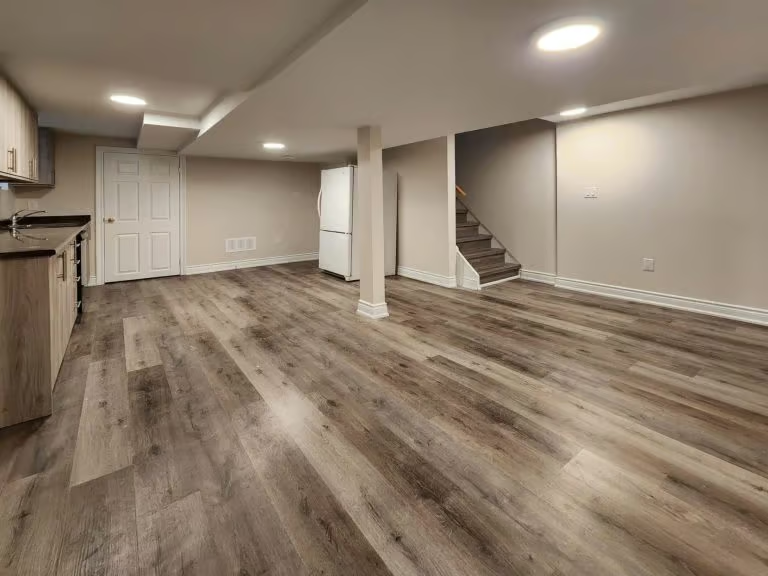
Solid hardwood should generally be avoided in basements and bathrooms — it simply doesn’t tolerate moisture and humidity well. Engineered hardwood performs better below grade than solid wood, but it isn’t waterproof. For basements specifically, many GTA flooring professionals now default to waterproof options (like SPC vinyl) rather than any wood-based product, precisely because a below-grade space carries a higher moisture risk regardless of how well the floor is engineered.
If you’re planning a basement renovation and want the warmth of real wood upstairs while keeping the basement itself moisture-resistant, it’s common — and often the smarter call — to use different flooring for each space rather than trying to match one material throughout the whole home.
Resale Value: Does It Actually Matter?
In the GTA’s resale market, hardwood — whether solid or engineered — remains something many buyers actively look for and, in some cases, expect. Engineered hardwood in particular tends to deliver strong resale value relative to its cost, since buyers generally can’t tell the difference between engineered and solid hardwood by looking at it, but the price gap between the two is significant. Laminate is a perfectly reasonable choice for your own comfort and budget, but it typically doesn’t carry the same resale premium as a genuine wood surface.
Which One Should You Choose?
- Choose solid hardwood if: you want the maximum lifespan and refinishing potential, you’re installing on the main floor over a wood subfloor, and budget is not the primary constraint.
- Choose engineered hardwood if: you want the look and resale value of real wood but need better stability for a condo, a room with a concrete subfloor, or a home with noticeable seasonal humidity swings — which, in the GTA, is most homes.
- Choose laminate if: budget is the top priority, you have a busy household with pets or young kids, and you’re comfortable with a synthetic surface that can’t be refinished later.
- For basements specifically: talk to your contractor about whether a wood-look waterproof option makes more sense than either hardwood or laminate, given the added moisture exposure below grade.
The AZreno Difference
At AZ Property Improvement & Remodeling, flooring isn’t a one-size-fits-all recommendation — we help GTA homeowners in Mississauga, Oakville, Burlington, Toronto, and beyond choose the right material for each specific space, then install it to last. Whether that’s engineered hardwood for a main-floor renovation or the right flooring pairing for a basement finishing project, we make sure the choice fits your home, your budget, and your climate — not just what looks good in a showroom
Not sure which flooring is right for your renovation? Book a free consultation with AZ Property Improvement & Remodeling and we’ll help you choose the right material for your space and budget:
📞 Call us at (647) 405-4922
📧 Email: info@azreno.ca
📍 Serving the GTA and surrounding areas
Follow us on Instagram